E-Invoices Directly from SAP: Quicker, Safer and Without Detours
May 19, 2026 | Reading time: Approx. 7 minutes

Product Manager at FIS
What if the issue and sending of a lawful e-invoice in the B2B area were as relaxed as pushing the “Save as PDF document” button? No system changeover. No export chaos. Just ready.
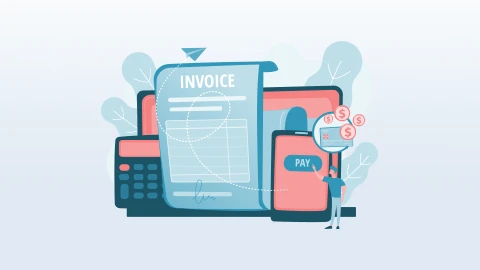
Due to the e-invoice obligation, the e-invoice implementation is coming closer and closer and with it the question that is rightly widespread in many SAP project spaces and IT departments: How do I integrate e-invoices with SAP without huge amounts of time and effort?
The good news: Those who already use an SAP system have the best starting position one could wish for. The even better news: There are solutions that can be seamlessly integrated into your existing SAP landscape without your having to reinvent your system.
Those who already use SAP S/4HANA or SAP Cloud ERP have the best basis ever. Master data, posting logic, tax codes, terms of payment – everything is available already. A thought-out SAP e-invoice integration begins precisely there and makes existing processes a part of a fully automated and standard-compliant invoice issue. There is no duplicate data maintenance. Manual postprocessing is no longer necessary. And there is no more guesswork as to whether the format was correct.
This article shows you how advanced e-invoice solutions work directly in SAP, what precisely that means for your daily business and why initial access is easier than expected. No matter if you have just started to deal with this topic or if you have already taken your first development steps.
The obligation exists; however, many processes are still lagging behind
Why “We are going to send a PDF invoice” will soon no longer do.
In Germany, the e-invoice obligation has applied in several stages in the B2B area for invoice receipt and invoice issue since January 2025. As from 2026, more and more companies are obliged to actively process incoming invoices and to issue outgoing invoices.
The XRechnung, ZUGFeRD, Factur-X and Peppol formats are defined in the European EN 16931 standard and the deadlines are already running. In addition, the ViDA initiative comes into play as from July 01, 2030. This means that e-invoices and digital reporting requirements (DRR) become mandatory for cross-border B2B sales and transactions within the European Union.
However, the situation in practice still often looks like that: E-invoices are issued manually in external portals, SAP data is transferred manually and finally it is checked whether all required entry fields have really been filled with correct information. This is expensive, prone to errors and actually unnecessary.
The good news for all SAP users: they do not have to reinvent the wheel. Their master data, posting logic and workflow settings are already available in SAP. A good e-invoice solution for SAP starts precisely there and converts existing processes into a fully automated and standard-compliant bill issue – no matter whether SAP Document and Reporting Compliance, SAP optimization or external tools of third-party providers are concerned.
This is how the electronic SAP invoice works in practice
A thought-out SAP e-invoice integration is seamlessly included in your existing SAP transactions – be it in the invoice, invoice verification or directly in financial accounting. In invoice processing, the user creates the document as usual.
In the background, the system automatically generates an e-invoice in the correct format, checks it and sends it via the configured channel. In this way, you fulfill all requirements of the e-invoice obligation.
Praxisleitfaden: E-Rechnung erfolgreich einführen
Dieser Leitfaden hilft Ihnen, drei zentrale Fragen zu beantworten:
What does the e-invoicing process mean for purchasing, invoice processing and service?
What electronic exchange means for purchasing: Incoming vendor e-invoices can directly be processed in SAP without manual entry, typing or media changes. The invoice verification in invoice receipt has access to structured data so that posting and release will be executed more quickly and safely.
For billing: Content queries and correction runs are reduced as invoices reach the recipient in full and in compliance with the standard and are not returned due to a format error. This has a direct effect on the cashflow.
Service teams also benefit from e-invoicing: In the future, maintenance orders and project settlements that previously had to be laboriously exported from SAP and manually entered into external tools can be sent directly and in compliance with the standard. The entire process – from service provision to paid invoice – remains in one system world.
Integration without system interruption: what distinguishes a good e-invoicing solution
Not every e-invoicing solution is equally good. What is crucial is whether it is really natively integrated in SAP or whether it only creates another media change. Pay attention to these criteria:
The best e-invoice solution is the one where your employees no longer notice after one day of training that something has changed – apart from the fact that now invoices are sent automatically.
E-invoice obligation is mandatory, but efficiency is the actual chance for the B2B business area
The e-invoice obligation applies. Being reluctant is more expensive than being active. Companies relying on a native SAP integration for e-invoices do not only solve the compliance problem but also achieve real gains in efficiency: reduced efforts and errors, faster processes and improved cashflow.
The best thing of all: If the solution, i.e. the e-invoice integration in SAP, has been successfully implemented, your teams will hardly notice any difference – apart from the fact that the invoice chaos on the desk will be considerably reduced at the end of the month.

Questions about this topic? Our team will be happy to assist you personally.

Read, take a look, inform yourself
In our download section, you will find a large number of SAP contents worth knowing – expert talks, white papers and flyers. To find right away what you are looking for, please use the filter function for topics and content type.