SAP Cloud ERP
In this specialist article, you will learn what SAP Cloud ERP is, how it works and how companies can benefit from it. We will discuss the most important functions and differences compared to SAP Cloud ERP Private Edition and explain what companies this solution is particularly suitable for.

Productmanager at FIS
What is SAP Cloud ERP?
SAP Cloud ERP (formerly SAP S/4HANA Cloud Public Edition) is a highly standardized and scalable ERP solution. By renaming the solution, SAP simplifies classification within its portfolio: SAP Cloud ERP is the cloud ERP at the core of SAP Business Suite and forms the digital backbone to which further suite components such as data, AI and integration functions are connected.
It enables fast implementation, reduces costs and provides regular innovations. As a cloud-based solution operated by SAP in a public cloud infrastructure, SAP Cloud ERP supports companies in managing central business processes – from finance to supply chain management. It provides access to advanced technologies, such as artificial intelligence and machine learning, to make processes more efficient.

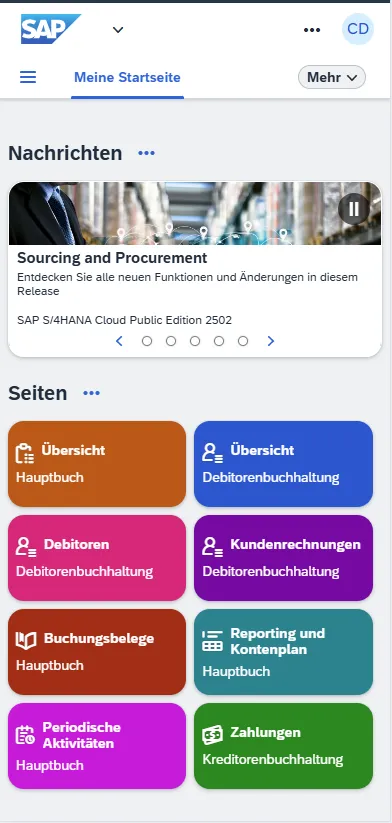
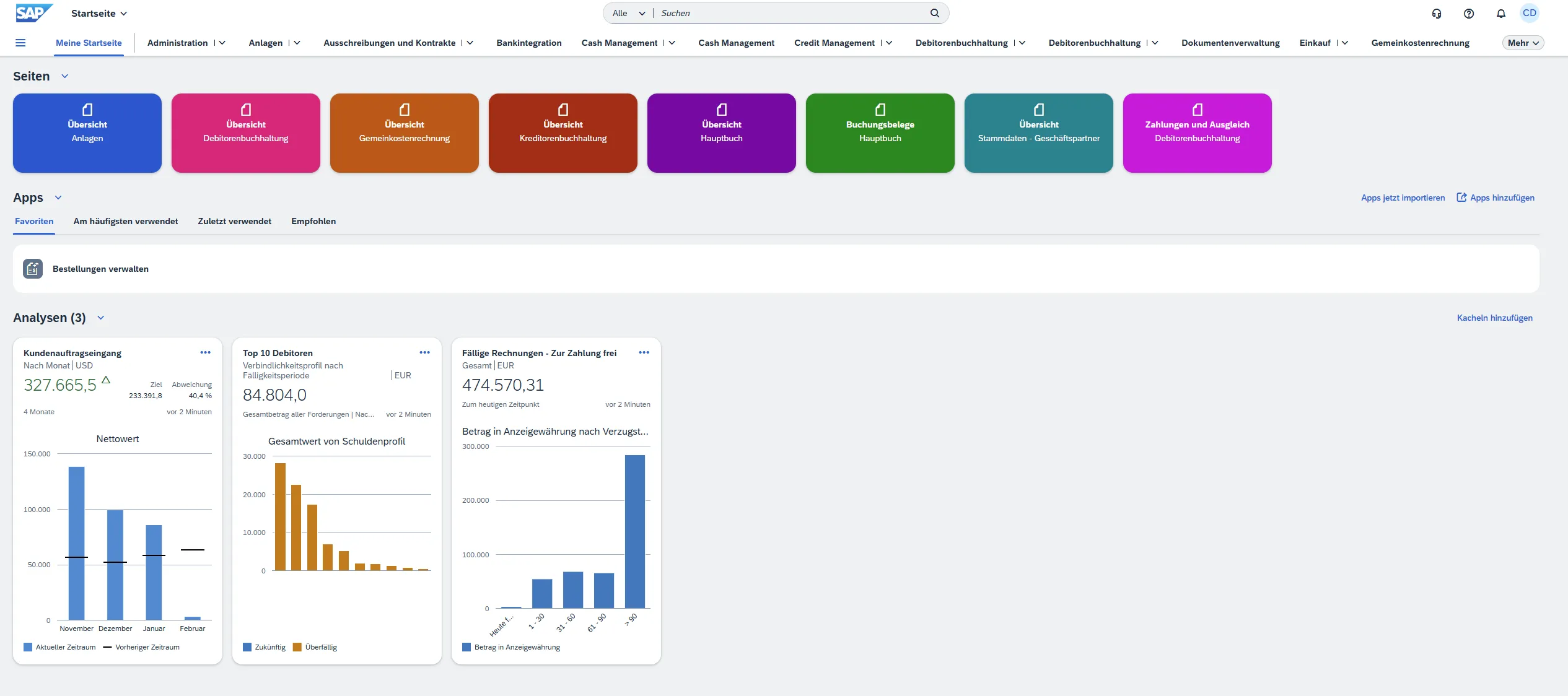
SAP Cloud ERP relies on the SAP Fiori user interface enabling intuitive and user-friendly navigation. Instead of classical SAP GUI, Fiori offers an app-based design orienting towards the requirements of modern end users. Thanks to the responsive design, all functions can be used on any device, such as desktop, tablet or smartphone. This facilitates access to important business processes and enables a flexible and location-independent way of working.
What benefits are provided by SAP Cloud ERP?
SAP Cloud ERP provides numerous advantages, such as:
Faster implementation through standardized processes
Lower costs thanks to the cloud-based rent model
Regular updates for continuous innovations
Scalability to grow with the company
Real-time data processing enabling fast and well-founded decisions
Automated business processes for increased efficiency
What kind of enterprises is SAP Cloud ERP suitable for?
SAP Cloud ERP is particularly suitable for companies with clearly defined and standardized processes looking for a quick implementation and a cost-effective solution. It is ideal for small and medium-sized companies as well as companies with standard processes that require fewer customizations but still want to benefit from the advantages of the cloud, such as scalability and flexibility.
Are you unsure whether SAP Cloud ERP is the right choice for your company?
How does SAP Cloud ERP work technically?
SAP Cloud ERP runs on a multi-tenant cloud infrastructure provided by leading hyperscalers such as Amazon Web Services (AWS), Microsoft Azure and Google Cloud.
In addition, SAP offers operation on its own servers, which is particularly important for companies with high data protection and compliance requirements.
Multi-tenant architecture enables the efficient use of resources, cost reduction and faster provision of innovations. The solution remains flexible and scalable. The cloud environment ensures seamless integration of SAP applications, enables real-time data processing, automated updates and easy access to advanced technologies and analysis tools.
What is the difference between SAP Cloud ERP and SAP Cloud ERP Private?
SAP offers its cloud ERP in two versions tailored to different company requirements:
SAP Cloud ERP
is based on a multi-tenant architecture, in which several companies share a common infrastructure while their data remains strictly separated from each other.
It is aimed at companies with clearly defined and standardized processes that prefer rapid implementation, lower costs and regular automatic updates.
SAP Cloud ERP Private
is based on a single-tenant architecture, in which each company is provided with a dedicated system landscape.
This variant is particularly suitable for companies with complex business processes and specific requirements. It enables in-depth adjustments, individual enhancements and customer-specific integrations that can be directly integrated into the cloud infrastructure. Companies retain a high degree of control over their system landscape, updates and integrations.
What does the two-tier approach mean with regard to Cloud ERP?
The two-tier approach describes a hybrid ERP model in which companies operate two ERP systems in parallel:
Tier 1: A comprehensive ERP system for the corporate headquarters , often operated on-premise or as SAP Cloud ERP.
Tier 2: A leaner, cloud-based solution such as SAP Cloud ERP for subsidiaries, branch offices or specialized business areas.
This structure enables companies to use the advantages of centralized enterprise management while local or industry-specific requirements are flexibly mapped in a second ERP environment.
Advantages of the two-tier approach
With this approach, companies combine the efficiency of centralized ERP control with the flexibility of a cloud-based solution, enabling them to optimally map both global business processes and local requirements.
Can non-SAP systems also be connected to SAP Cloud ERP?
SAP Cloud ERP offers comprehensive options for integrating non-SAP systems, which is especially crucial in heterogeneous IT landscapes in order to optimize data flows and ensure consistent business processes. Several tools and approaches are available for this purpose:
SAP Integration Suite
This platform enables the connection of SAP and non-SAP systems by means of functions such as API management, open connectors and integration flows. It offers predefined connectors and standardized processes to ensure seamless integration.
APIs und OData Services
External systems can be connected securely and flexibly via provided APIs and standardized Web services such as SOAP and REST.
SAP Business Technology Platform (SAP BTP)
SAP BTP provides tools such as SAP Cloud Connector and Extension Suite to facilitate integrations and develop tailor-made applications.
Middleware und iPaaS-Lösungen
External middleware such as MuleSoft, Dell Boomi or iPaaS services can be used to fulfill complex integration requirements.
Event-Driven Architecture
Solutions, such as SAP Event Mash, enable systems to react to events in real time and, as a consequence, enable asynchronous communication between SAP and non-SAP systems.
Custom Development
Customer-specific enhancements and individual integration logics can be developed and integrated via SAP BTP.
These comprehensive integration options ensure data consistency, automation of processes and higher flexibility. In this way, companies can make optimal use of their IT landscape, implement market requirements faster and remain competitive in the long term.
Conclusion
SAP Cloud ERP provides companies with a high-performance and highly standardized ERP solution that has been specifically developed for the requirements of advanced and growth-oriented companies. With its fast implementation, a flexible cost structure and regular updates, it enables an uncomplicated access to the world of cloud technologies. Companies benefit from efficient and automated business processes and real-time data promoting well-founded decisions and sustainable innovations.
The Public Edition is the optimal choice particularly for companies with clearly defined processes and the wish for scalability and agility. It combines the advantages of the cloud – from low operating costs to innovative functions such as AI and machine learning – with the highest security standards and a global infrastructure.
SAP Cloud ERP is not only a solution for the present but a strategic investment in the future. It helps companies adapt flexibly to market changes, optimize their IT costs and, at the same time, successfully master digital transformation.
FAQ – frequently asked questions
Related Topics