SAP Datasphere
In this specialist article, you will get a comprehensive overview of SAP Datasphere, the cloud-based SAP Data Warehouse solution. We will show which data management tasks are assumed by the platform, the functions it offers and the benefits it provides for enterprises. Furthermore, you will learn how SAP Datasphere is used as a basis for a Business Data Fabric and how it fits in with SAP Business Data Cloud.

Product Manager at FIS
What is SAP Datasphere – and which functions does the solution provide?
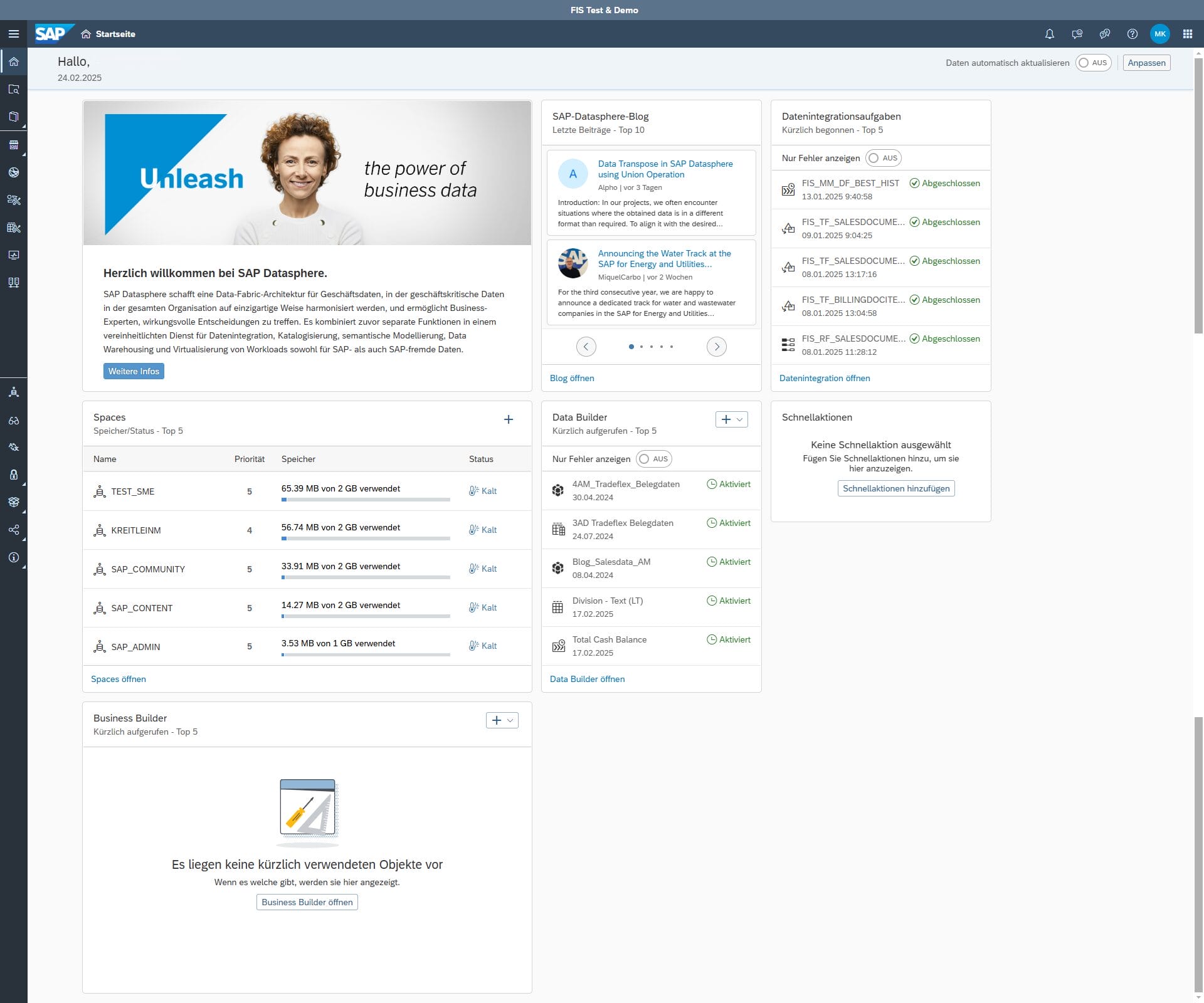
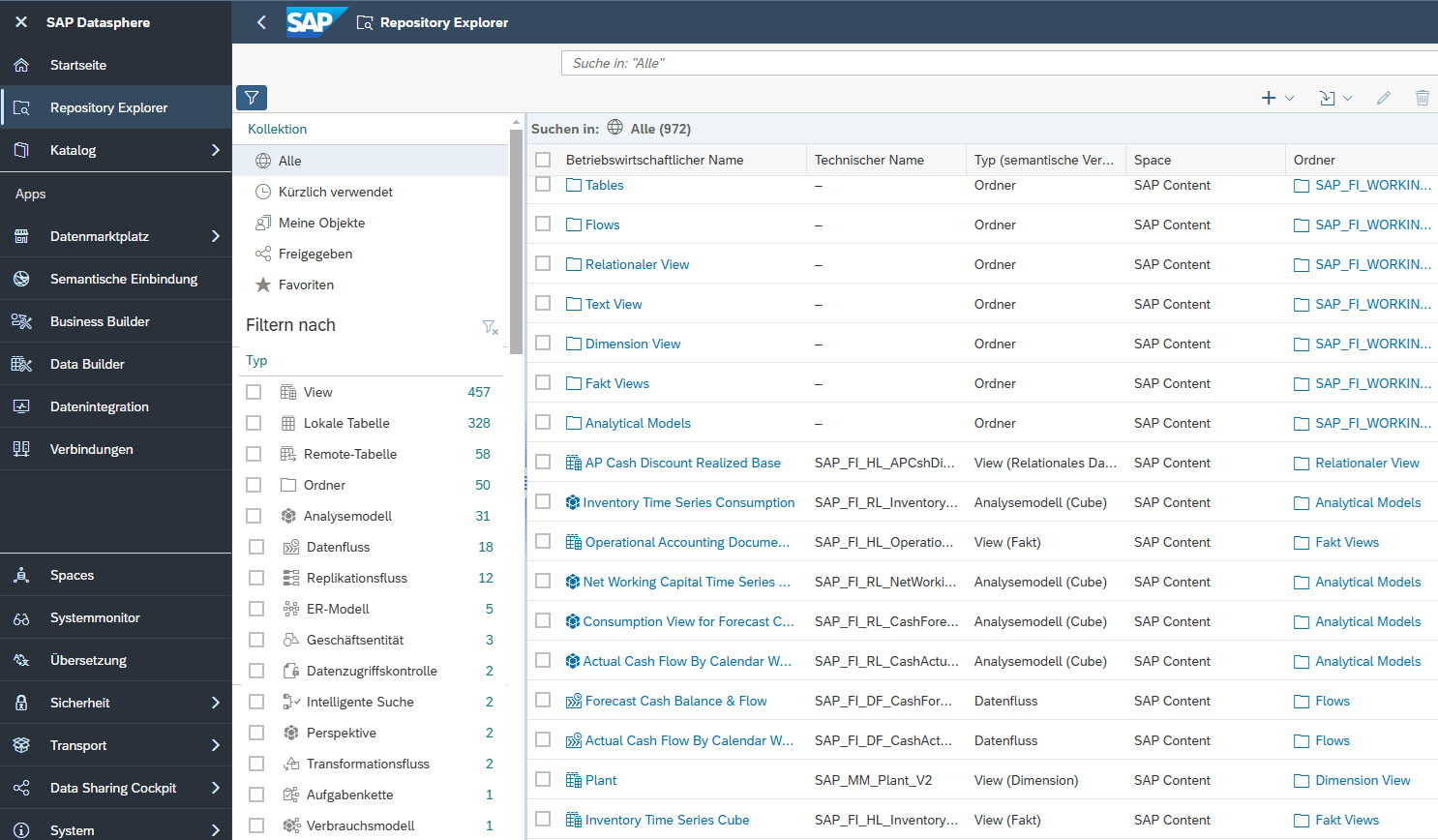
SAP Datasphere is the central SAP cloud solution for advanced data management – and consequent further development of SAP Data Warehouse Cloud. Enterprises integrate data from SAP and non-SAP systems, from the cloud or local sources in a uniform platform. There, this data can be consistently formatted, analyzed and provided – irrespective of data format or storage location.
The solution combines self-service functions for user departments with IT governance requirements. In this way, a data landscape without media changes is created, where structured and unstructured data is used efficiently – in real time, safely and comprehensibly.
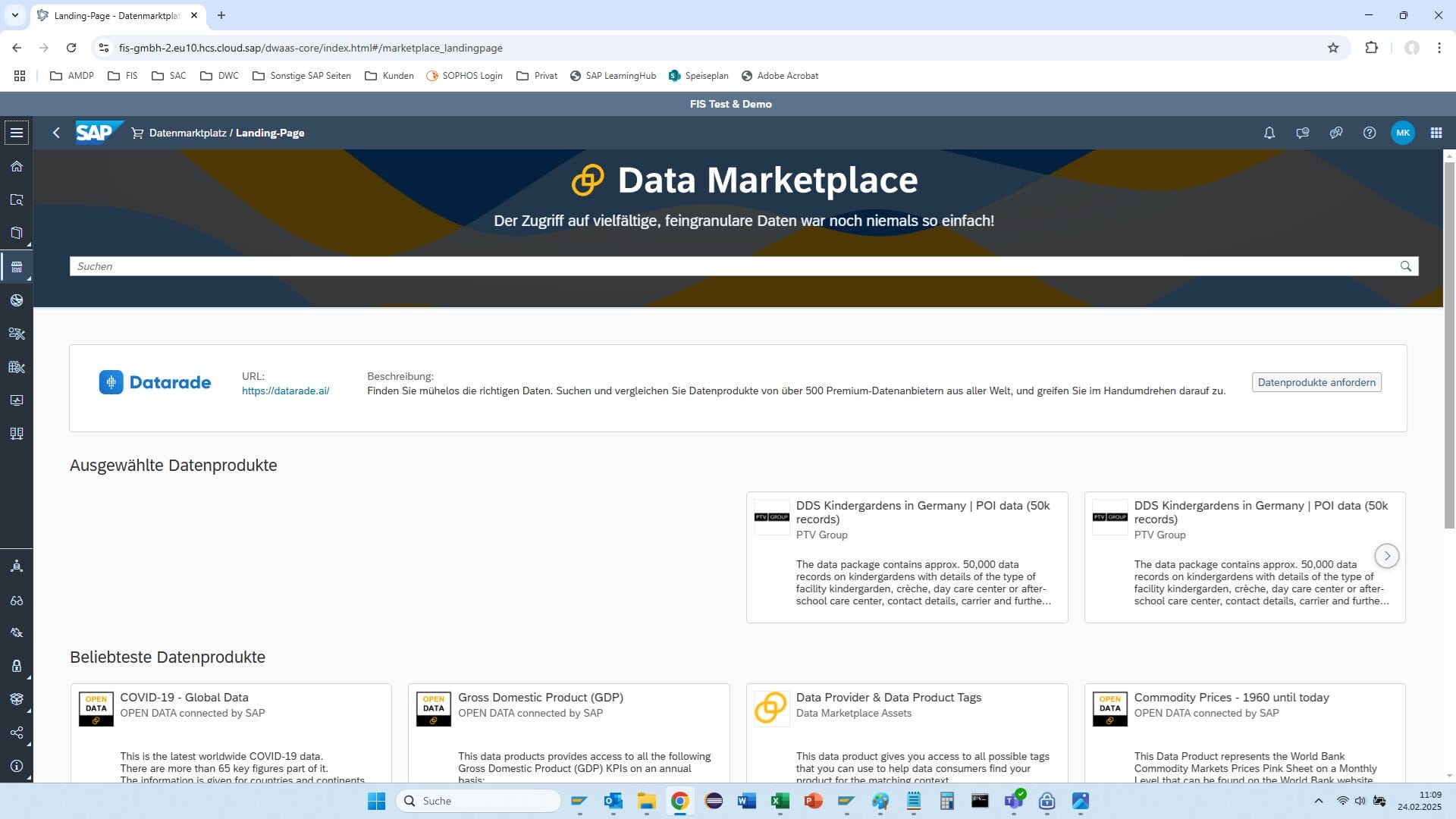
Overview of the most important functions:
In short: SAP Datasphere centrally collects all company data – consistantly, flexibly and ready for well-founded decisions
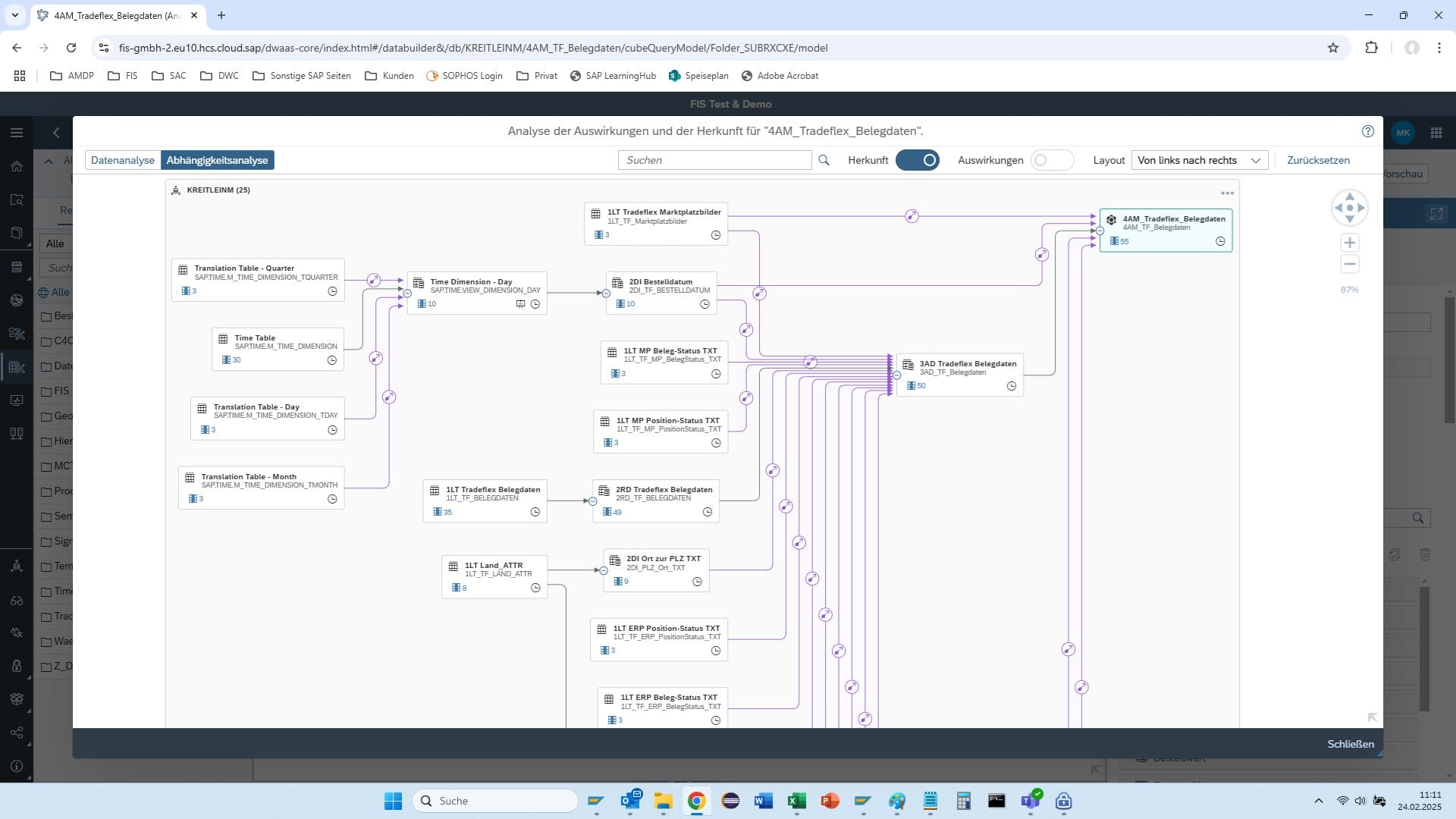
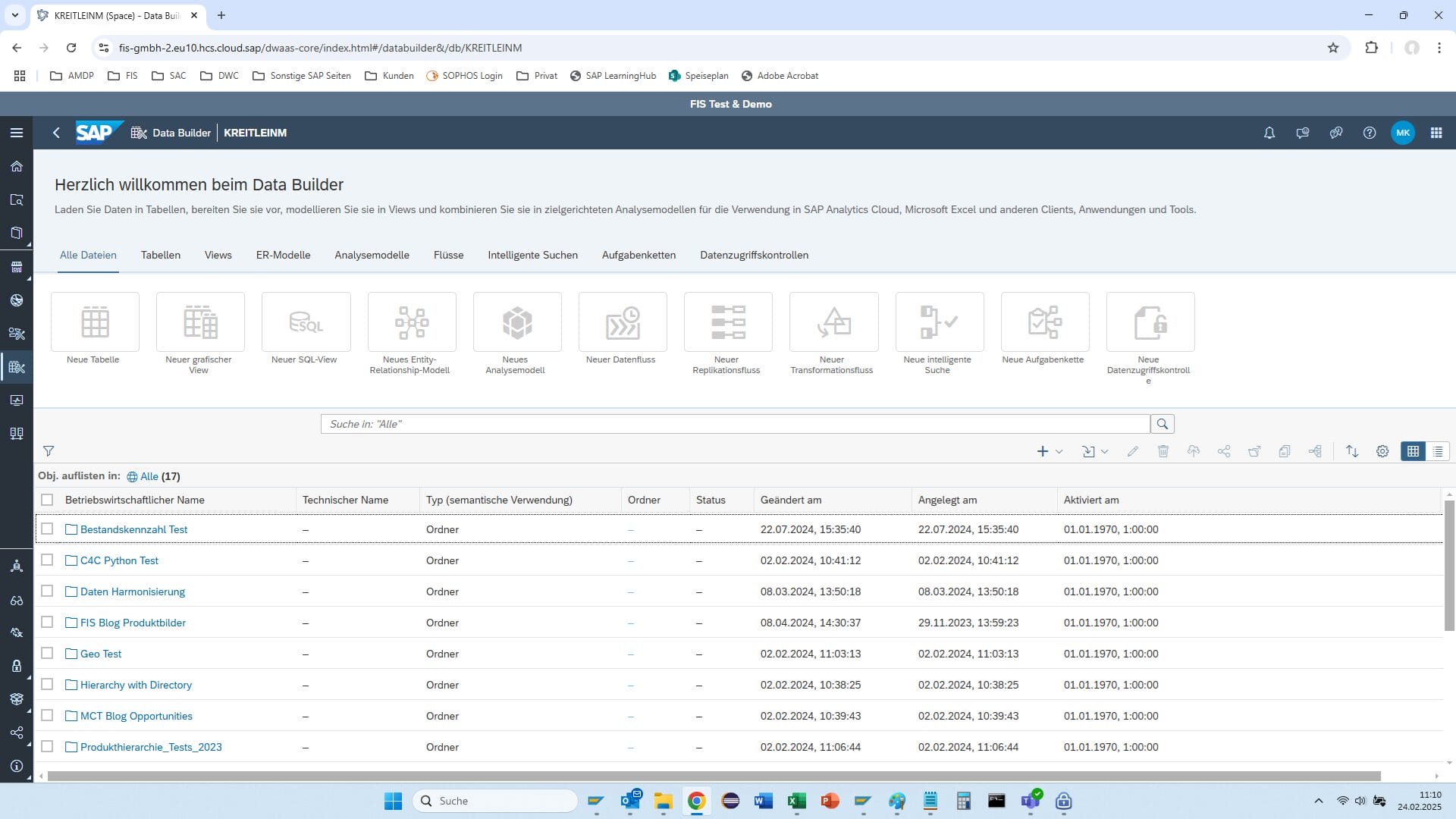
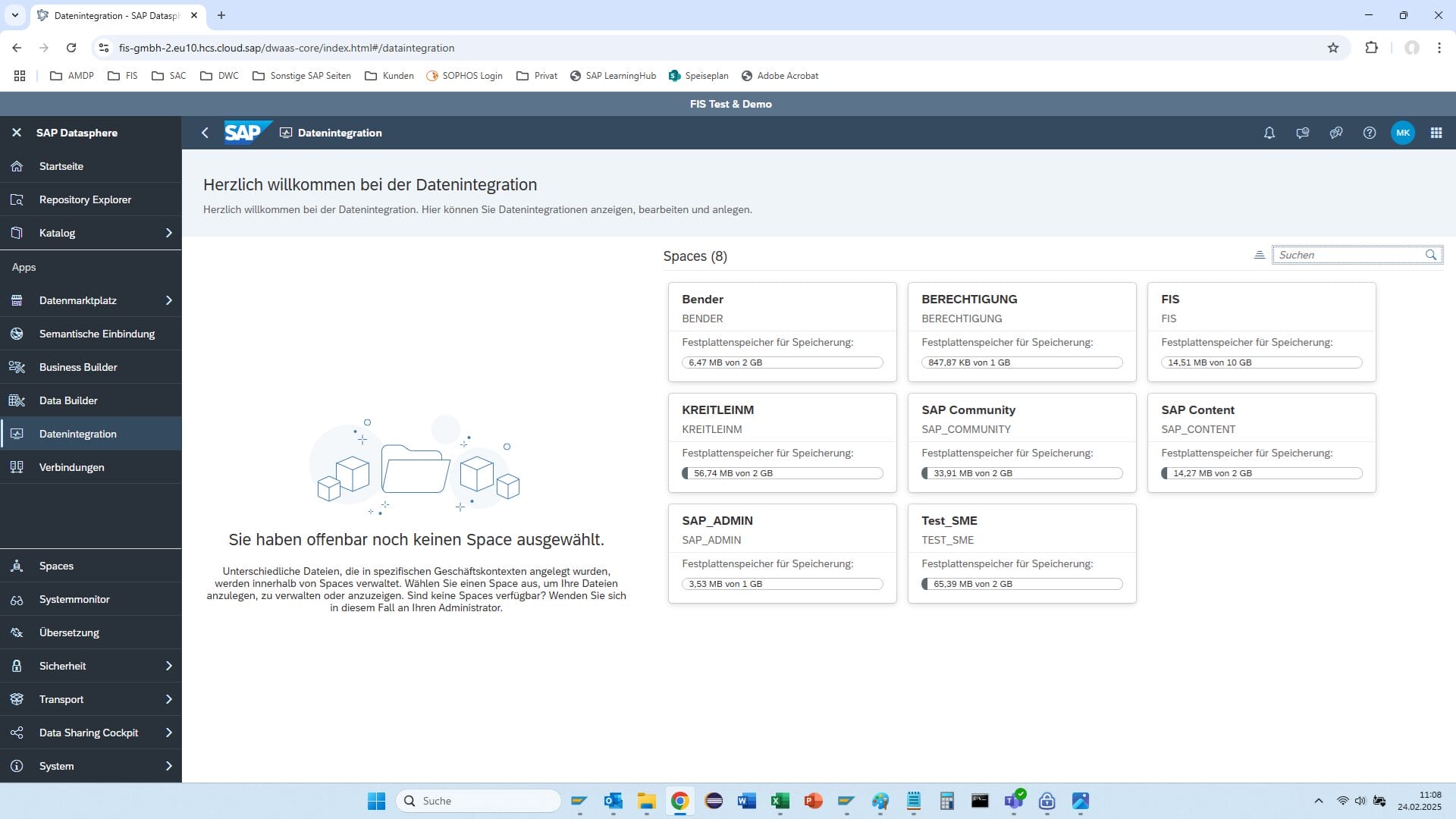
What are the tasks of SAP Datasphere?
SAP Datasphere supports enterprises in efficiently using their data in four central task fields:
1. Provide data with context
SAP Datasphere enables direct access to business-critical data including metadata and business logic – in a consistent, comprehensible and directly usable way. Semantic definitions structure the data logically, relationships remain unchanged and even user departments without IT skills can directly use them.
An integrated data catalog facilitates the management of all data sources and ensures that internal guidelines and external requirements – such as data protection and compliance – are observed. Existing definitions can be reused, which saves time and enables precise analyses.
2. Enrich and enhance data projects
Enterprises virtually or physically access data from any kind of sources, specifically enrich internal information with external data and integrate solutions from the open data ecosystem – for new insights in real time. By means of data bundling, replication and real-time integration, a consistent view of all data is generated. Artificial intelligence and machine learning provide additional forecasts, e.g. for market or process development.
Additional insights enabled by SAP Datasphere Marketplace: Here, internal data can easily be complemented with market data, industry trends or further external information – for even more profound analyses.
3. Simplify data landscape
SAP Datasphere reduces the complexity of your data landscape and enables central access to all data – irrespective of whether it is taken from local or cloud-based sources, from SAP or non-SAP systems. User departments integrate, analyze and manage data efficiently via user-friendly low-code/no-code tools.
SAP Datasphere reduces the complexity of your data landscape and enables central access to all data – irrespective of whether it is taken from local or cloud-based sources, from SAP or non-SAP systems. User departments integrate, analyze and manage data efficiently via user-friendly low-code/no-code tools.
4. Create basis for a Business Data Fabric
Data will only be valuable if it is easily accessible, transparent and reliable for all business units. This is precisely where the Business Data Fabric approach comes in: a consistent data architecture that simplifies and accelerates access to trustworthy information.
SAP Datasphere forms the technological basis for this approach. The platform combines central data provision, self-service access and comprehensive governance in one solution. In this way, a networked data landscape is generated, where all user departments can flexibly use consistent data – irrespective of system or storage location.

Further on, you will learn how SAP Datasphere specifically implements this Business Data Fabric and which benefits this approach provides for your enterprise.
Which benefits does SAP Datasphere provide?
SAP Datasphere provides a multitude of advantages that support enterprises in efficiently implementing their data strategy and derive maximum benefit from their data:
What is a Business Data Fabric – and how is it associated with SAP Datasphere?
SAP Datasphere is the strategic cloud solution for advanced data warehousing. Depending on the requirements, however, SAP provides further proven solutions for data management, analysis and reporting – including different usage scenarios and integration options:
SAP Datasphere forms the technological basis for a Business Data Fabric and follows a clear approach in this context: Business data shoud be available in real time including context, structure and logic – easily detectable, comprehensible and directly usable. In this way, precise analyses and well-founded decisions can be made without technical hurdles.
Your benefits by using a Business Data Fabric:
By using SAP Datasphere as a basis, you will implement the vision of a Business Data Fabric – and, in doing so, lay the foundation for the new SAP Business Data Cloud version.

What other data warehouse & reporting solutions are offered by SAP?
SAP Datasphere is the strategic cloud solution for advanced data warehousing. Depending on the requirements, however, SAP provides further proven solutions for data management, analysis and reporting – including different usage scenarios and integration options:
The solutions differ depending on the requirements concerning data integration, reporting and real-time analyses.
Integration with SAP Datasphere:
Many of these solutions can directly be connected to SAP Datasphere. In this way, existing BW models can be integrated via the BW bridge for instance and data from different sources can be centrally analyzed – in combination with cloud-based reporting solutions such as SAP Analytics Cloud.
What role does SAP Datasphere play in Business Data Cloud?
With Business Data Cloud, SAP has announced a new solution package that combines data integration, analysis and artificial intelligence within a consistent architecture. The objective is to harmonize data from SAP and third-party sources across systems, provide this data and make it usable efficiently – for analyses, reporting and AI-supported applications.
SAP Datasphere is a central component of SAP Business Data Cloud and forms the basis for its data management functions. The platform ensures that company data including context and logic is accessible in real time – irrespective of storage location or source system.
Due to its close interconnection with further SAP solutions such as SAP Analytics Cloud, SAP Datasphere helps implement the vision of a Business Data Fabric and provide enterprises with a uniform data basis for well-founded decisions.
Conclusion
SAP Datasphere supports enterprises in centrally integrating and managing their data and make it available for analyses – irrespective of whether it comes from SAP or non-SAP systems, from the cloud or local sources. Due to its uniform platform, a consistent data basis is created that can be used by IT departments and user departments.
The solution offers flexible self-service functions, comprehensive governance options and enables efficient management of large datasets – even in real time. Furthermore, SAP Datasphere provides the basis for a Business Data Fabric that simplifies and accelerates company-wide access to trustworthy data.
Due to its integration with reporting and analysis tools such as SAP Analytics Cloud, insights gained from the provided data can be used efficiently. In this way, data-based decisions are accelerated and processes measurably improved.
As a consequence, SAP Datasphere forms a scalable basis for a future-proof data architecture – for advanced analysis, planning and decision-making processes.