Consensus Notification Procedure with FIS/hrd KMV
In this technical article, you will learn how the FIS/hrd KMV product supports public and non-public institutions with a uniform and modern process, how it works, and what advantages it offers within the Consensus Notification Procedure.

Product Manager at FIS
What is the Consensus (KONSENS) Notification Procedure (KMV)?
The Consensus (KONSENS) Notification Procedure is a standardized electronic process for transmitting certain information from third parties to the tax authorities. Simply put, this means that various entities—such as employers, insurance companies, or government agencies—report tax-relevant data to the tax office digitally, instead of on paper as previously. These notifications always relate to a specific tax case, for example, the taxation of a specific individual or company.
KONSENS stands for “Coordinated New Software Development for Tax Administration.” It is a joint e-government project of the federal and state tax authorities (including Bavaria, Baden-Württemberg, Hesse, Lower Saxony, and North Rhine-Westphalia) to standardize and modernize tax IT. Within this framework, the notification procedure was created to digitize and harmonize administrative processes in the states. The goal of the KMV is to enable a uniform approach for electronic third-party reports and to replace the previously paper-based reports with a machine-based process. This process contributes significantly to digitalization – both on the part of the reporting entities, such as companies or public authorities, as well as on the part of citizens and the tax administration.
The legal basis is the Notification Ordinance (MV). It obliges numerous institutions – public authorities, functional authorities (i.e., companies that perform public administration tasks), and public broadcasters – to inform the tax authorities about certain payments and transactions. These include, for example, fees, disbursed benefits, and other relevant matters. For example, the tax office receives a notification when a freelance journalist receives a fee for a production or when a public body pays a trainer an expense allowance. Grants and support payments are also recorded as notifications. The notifications cover a broad spectrum – from an employee’s wage tax certificate and pension payment data to reports of granted funding.
What changes have been in place for public bodies regarding electronic data transmission since 2025?
For several years now, many data important for tax returns, such as wage tax certificates or social security contribution data, have been able to be submitted electronically. What’s new is that, starting in 2025, all notifications from authorities and public bodies must also be submitted digitally. Purely paper-based processes are too slow and error-prone to quickly disburse aid payments, for example. The legislature responded by amending the Notification Ordinance, which requires the complete digitalization of these reporting channels. As part of this, the central IT department of the tax administration was commissioned to develop a universal interface through which all notifications from the public sector can be submitted electronically. For the first time, it is now permitted to send a wide variety of payments and facts bundled digitally to the tax authorities via a single interface – a major step forward for modern tax administration. This standardization significantly reduces programming and maintenance effort and makes it easier to add additional reporting items to the process “at the push of a button” in the future.
What challenges arise from the mandatory electronic transmission of reporting data as part of the Consensus Notification Procedure?
With the mandatory electronic transmission of reporting data under the KONSENS notification procedure, many companies face new challenges: High manual effort, technical complexity, and growing legal pressure increase the need for action. Without a suitable solution, errors, delays, and additional work are inevitable.
The following problems frequently occur without automation:
Is there a module for the automated processing of the Consensus Notification Procedure directly in the SAP system?
FIS/hrd KMV is a solution specifically developed for SAP HCM (Human Capital Management). As part of the FIS/hrd product family – known for audit-compliant, efficient HR solutions – this module enables automated processing of the Consensus notification process directly within your SAP system. Simply put, FIS/hrd KMV acts as an intermediary between your company and the central federal agency interface.
The software is fully integrated with SAP HCM and automatically extracts relevant information from existing personnel data and payroll results, e.g., fields such as taxable payments, contribution data, personal identification numbers, etc. This information is prepared according to official specifications. FIS/hrd KMV is fully familiar with the requirements of the tax administration and ensures that the data records meet the formal criteria, such as the current interface descriptions on the tax administration portal. The tool then transmits the messages in encrypted form to the responsible tax authority via the central KMV interface, often via the ELSTER platform. This process runs automatically in the background for the user, eliminating the need to manually export files or access portals.

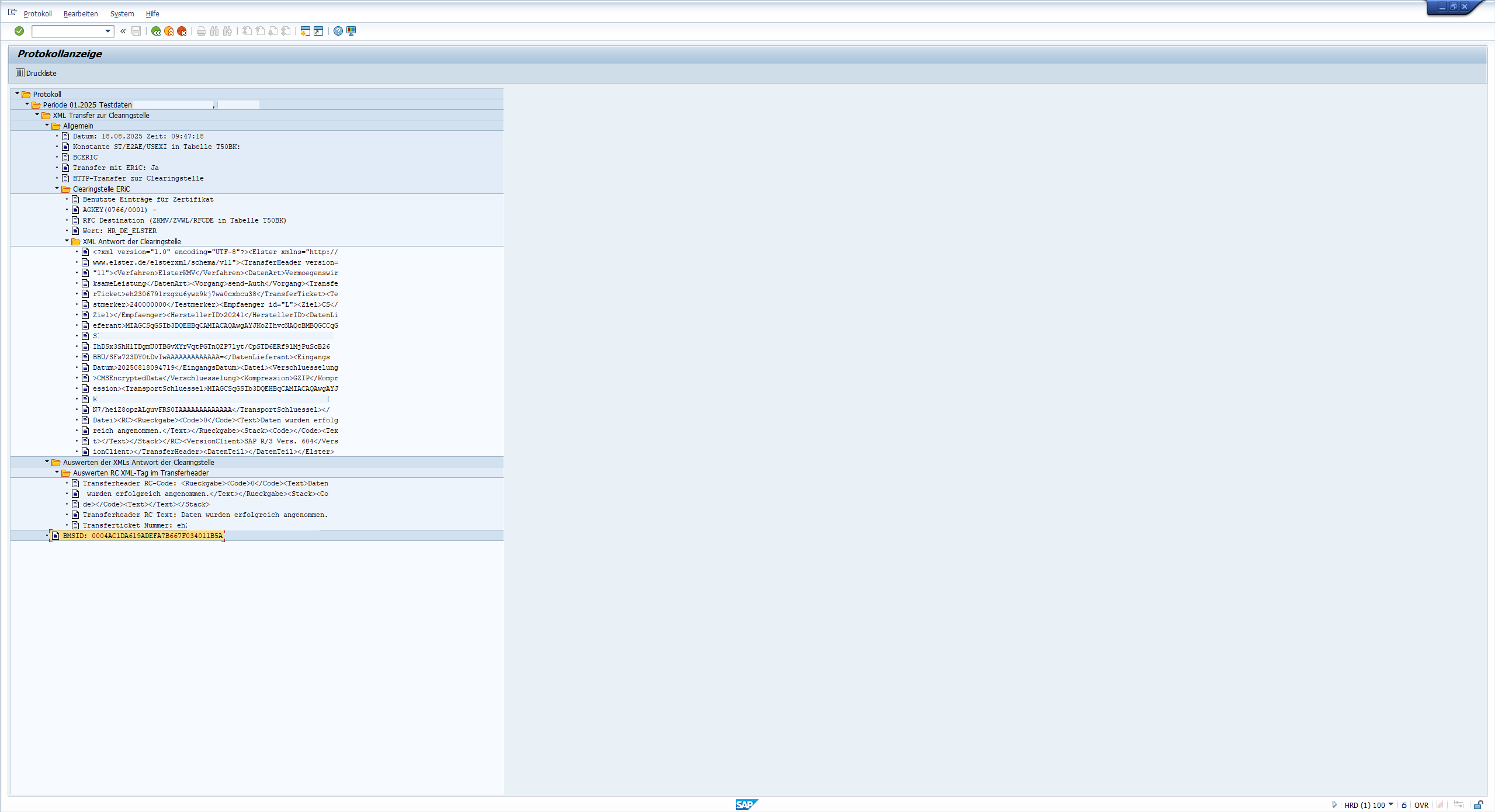
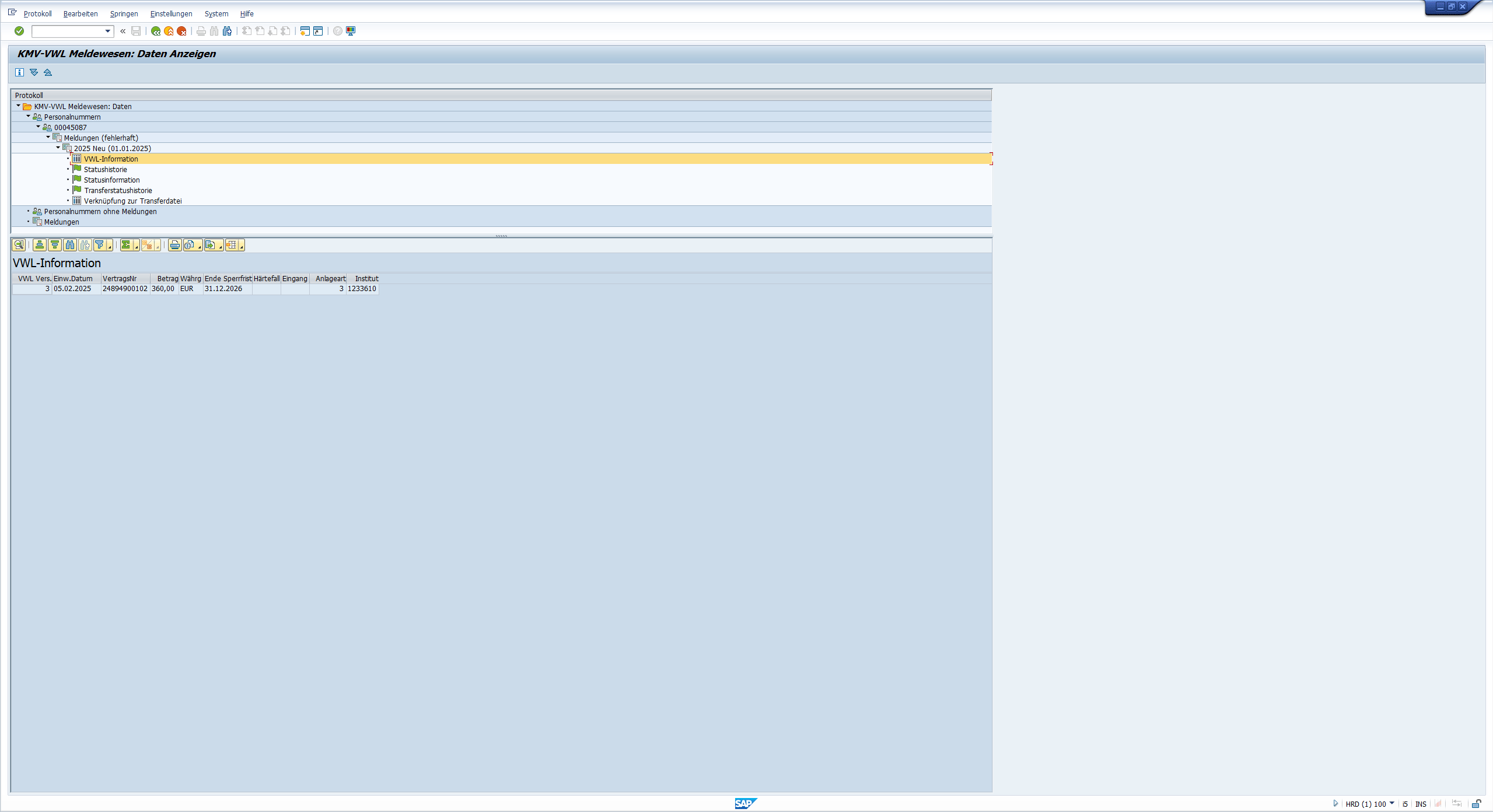
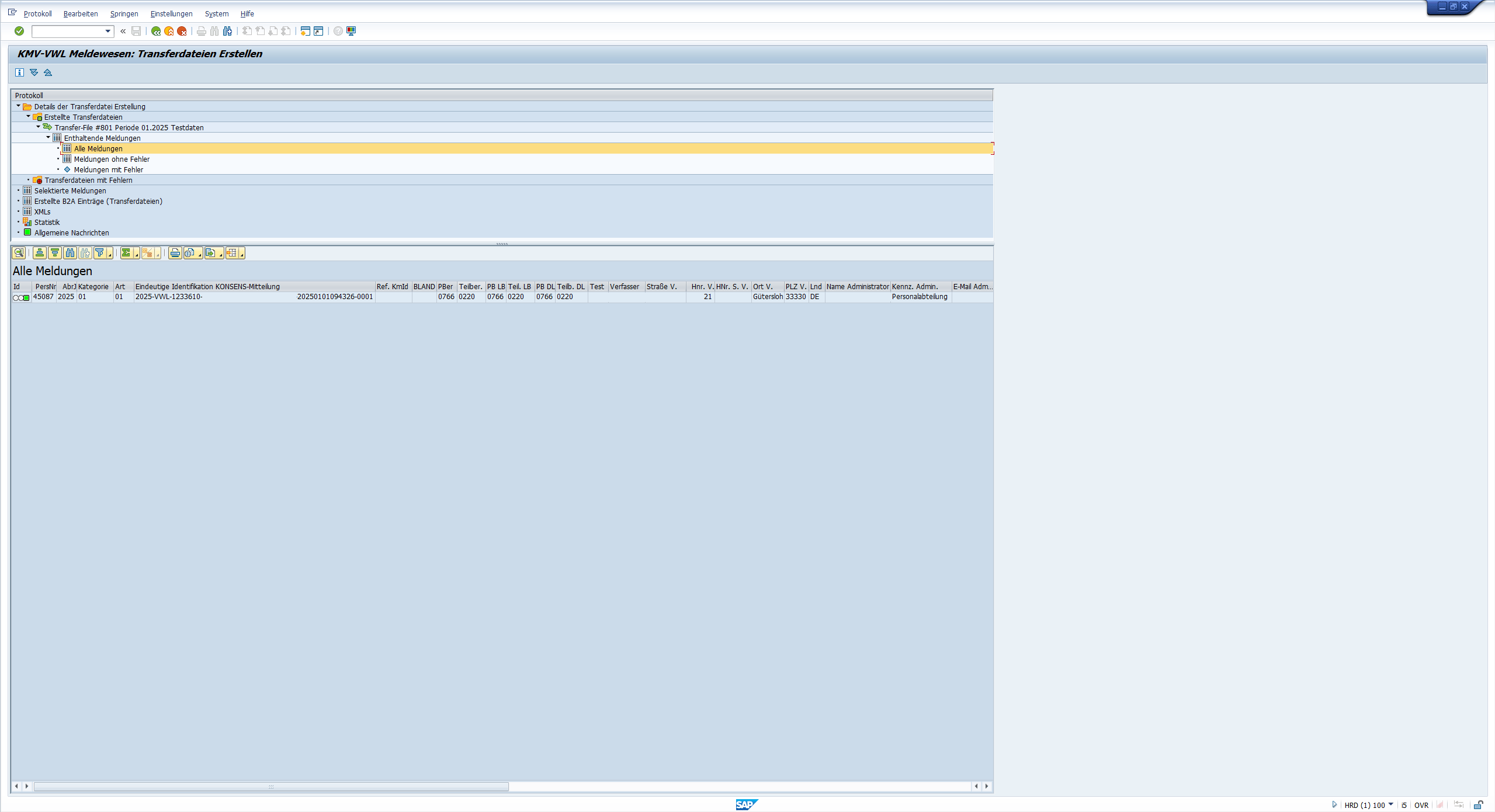


A new and particularly advantageous feature is that FIS/hrd KMV not only automates the transmission but also the return channel. This means that feedback and notices from the authorities are automatically received by the system and assigned to the corresponding processes in SAP HCM. For example, the tax office can digitally transmit confirmations or queries. FIS/hrd KMV imports these feedbacks directly into the system. Your clerks can thus immediately see the status of each notification and can process any resulting tasks, such as corrections or subsequent submissions, more quickly. This end-to-end integration significantly simplifies and accelerates the processing of notification processes.

What advantages does FIS/hrd KMV offer?
FIS/hrd KMV offers a number of advantages:
Data transmission is automated and digital, eliminating manual work. Routine tasks such as compiling reports or logging into government portals are eliminated. HR staff can focus on more important tasks while the system handles the processes in the background.
Direct data transfer from SAP HCM ensures consistent and accurate information transfer. Typos or transcription errors, which occur with manual data entry, are avoided. Furthermore, the traceability of reports is maintained – every submitted notification is documented in the system in an audit-compliant manner. This increases data quality, creates transparency, and significantly reduces the risk of errors.
Because feedback from the tax authorities is automatically transferred to the system, response times are shortened. Your employees immediately see whether a notification was successful or if there are any queries and can respond immediately. Regular automated retrieval ensures your team doesn’t miss any important messages from the tax office, which can be crucial, for example, when deadlines are being met.
The software is further developed and maintained by FIS. Support for the applicable ERiC interface is ensured by the provider. This provides secure support for the digitalization of official reporting processes.
In summary:
FIS/hrd KMV enables you to use the Consensus (KONSENS) Notification Procedure with minimal effort, maximum security, and directly from your SAP system.
The tool significantly reduces the workload for your company:
Employees in the HR and HR IT departments are freed from monotonous administrative tasks, error rates are reduced, and communication with authorities is faster and smoother.
Who is the FIS/hrd KMV tool for automated processing in SAP HCM suitable for?
The solution is aimed at medium-sized and large companies and institutions that use SAP HCM and are required to report data within the Consensus (KONSENS) Notification Procedure. HR IT teams and personnel administration departments in all industries – from manufacturing to technical wholesale – typically benefit, as the reporting obligations can apply across all sectors. Public institutions or functional authorities, in particular, have been required to submit more reports digitally since 2025. For them, FIS/hrd KMV is a fast and reliable way to fulfill the obligations of the new taxation process. However, traditional companies with many employees, i.e., a large amount of wage tax statements and social security data, can also gain significant advantages through automation.
As an add-on integrated into SAP HCM, FIS/hrd KMV is particularly attractive for existing SAP users. Existing customers of the FIS/hrd product family can seamlessly expand the module and thus further enhance their HR compliance. However, new customers who want to future-proof and efficiently design their HR processes will also find FIS/hrd KMV a software solution that facilitates their transition to digital collaboration with the tax authorities.
For employers and institutions that must report data to the tax authorities, FIS/hrd KMV ensures a smooth, digitalized process, for example, in the following application areas:
Conclusion
The Consensus (KONSENS) Notification Procedure marks an important step toward digital administration and standardized tax procedures. For companies and public bodies, this means new obligations on the one hand, but also an opportunity to optimize processes on the other. The SAP add-on FIS/hrd KMV offers ideal support: It seamlessly connects your SAP HCM system with the central authority interface and automates the entire notification process – from data entry to feedback from the tax office. This saves you time, avoids errors, and fulfills all legal requirements in the most efficient way. FIS/hrd KMV relieves your employees, increases data security, and accelerates communication with authorities.
In short: The future-oriented solution for driving digitalization in HR while simultaneously making collaboration with the tax administration as easy as possible.